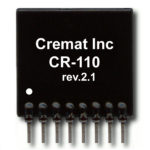
CR-11X CSP modules
Our principal line of products are our charge sensitive preamplifier (CSP) modules, which are small 8-pin single in-line package (SIP) epoxy-coated, single channel circuits less than 1 square inch in size.
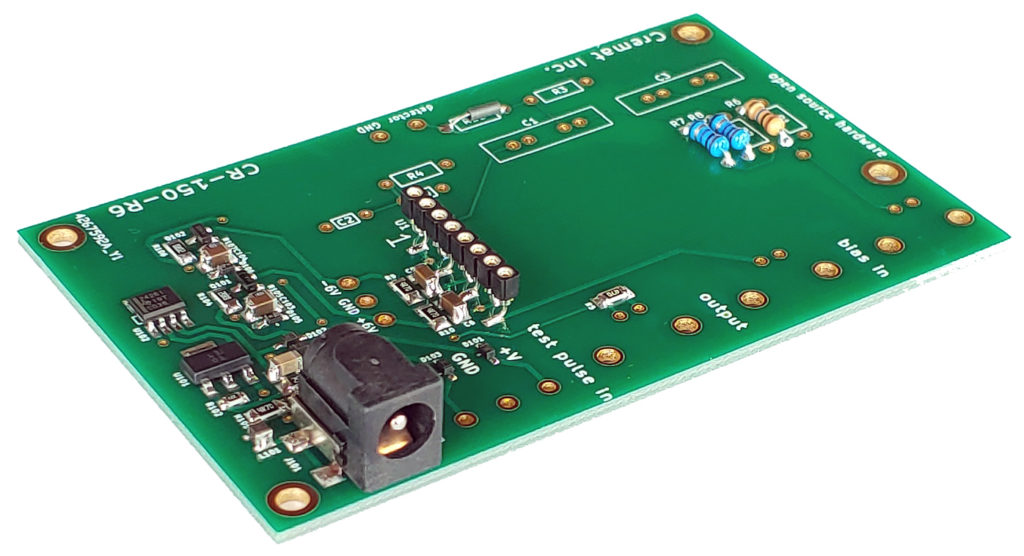
CSP evaluation board
The CR-150-R6 evaluation board makes it easier for you to evaluate Cremat's line of charge sensitive preamplifiers. The CR-150-R6 has an 8-pin socket to accept a preamplifier module, as well as BNC connectors for the preamplifier output, test input, and detector bias input. There is a jack for a +24V wall-mounted power supply (available separately).
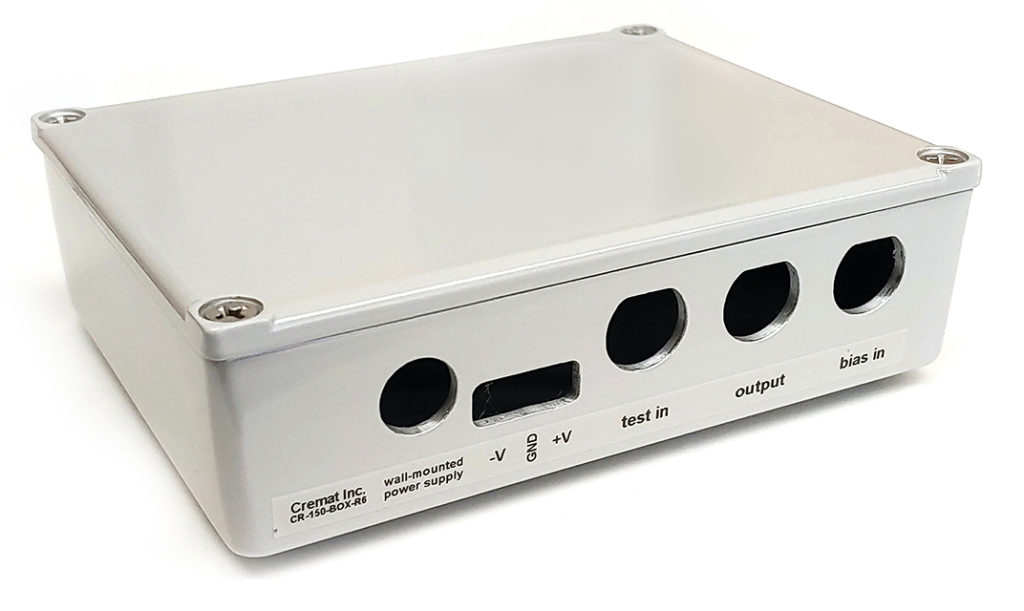
CSP housing
Because Cremat's charge sensitive preamplifiers are relatively sensitive, care must be taken to shield the active electronics from the usual ambient RF interference. The CR-150-BOX-R6 and CR-150-BOX-R6-HV are designed to accept and fully shield the CR-150-R6 evaluation board. We also now offer the CR-150-BOX-NoBias to house the CR-150-R6 board when detector biasing through the preamplifier is not used.
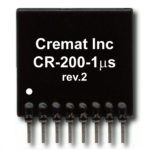
CR-200-X shaper modules
Shaping amplifiers are used to transform the shape of the pulses produced by charge sensitive preamplifiers to make the pulses Gaussian-shaped (bell shaped), improve signal-to-noise, and provide gain for the signals. Similar to Cremat's line of charge sensitive preamplifiers, the CR-200 series are 8-pin single in-line package (SIP) epoxy-coated, single channel circuits less than 1 square inch in size. They come in eight different shaping times from 50ns to 8μs.
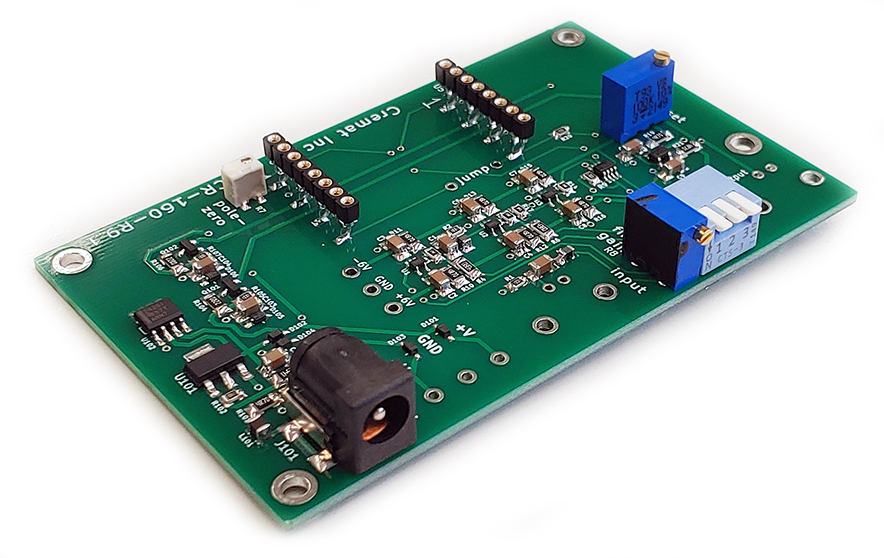
Shaper module eval board
The CR-160-R9 evaluation board is intended for the evaluation of the CR-200 series of shaping amplifiers. When used with a CR-200 shaping amplifier and the optional CR-210 baseline restoration module, the CR-160-R9 creates a low noise Gaussian shaping amplifier having input and output BNC connectors, adjustable gain, reversible polarity, output offset adjustment, and pole/zero compensation.
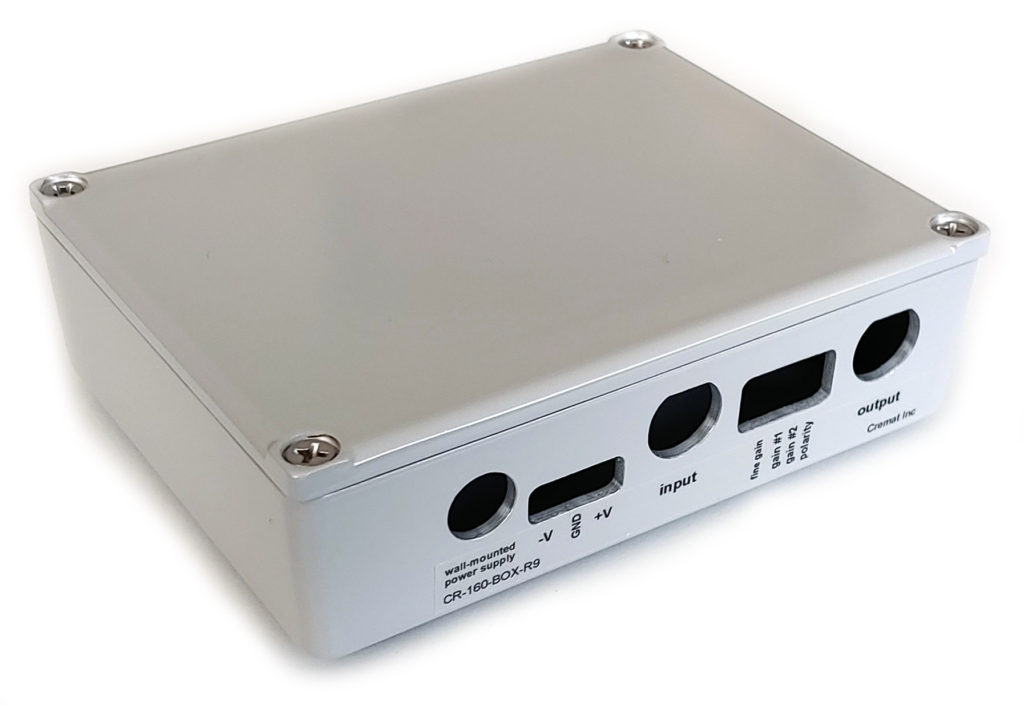
Housing for shaper eval board
The CR-160-BOX-R9 is a die-cast aluminum housing intended for use with the CR-160-R9 evaluation test board. Holes have been positioned on the CR-160-BOX-R9 in locations associated with BNC connector positions (input and output), power connector position (+24V wall mount power adapter), and +/-DC power on the CR-160-R9 board. There is also a rectangular hole to gain access to the fine gain adjustment potentiometer, the piano-style gain and polarity switches on the CR-160-R9 board.
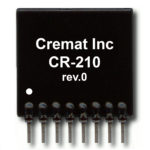
CR-210 baseline restorer
The CR-210 is a baseline restorer (BLR) circuit, developed to correct for the natural baseline depression at the shaping amplifier output occurring at medium to high count rates. The CR-210 BLR circuit will set the baseline at ground and result in higher resolution spectroscopic measurements in conditions of varying count rate.
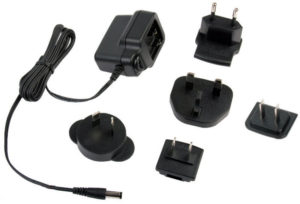
CR-24V wall mount power supply
The CR-24V wall mounted power supply provides power to either the CR-150-R6 evaluation board or the CR-160-R9 evaluation board. The power supply can be used internationally because an assortment of connector blades are provided which can adapt to many different outlet styles.
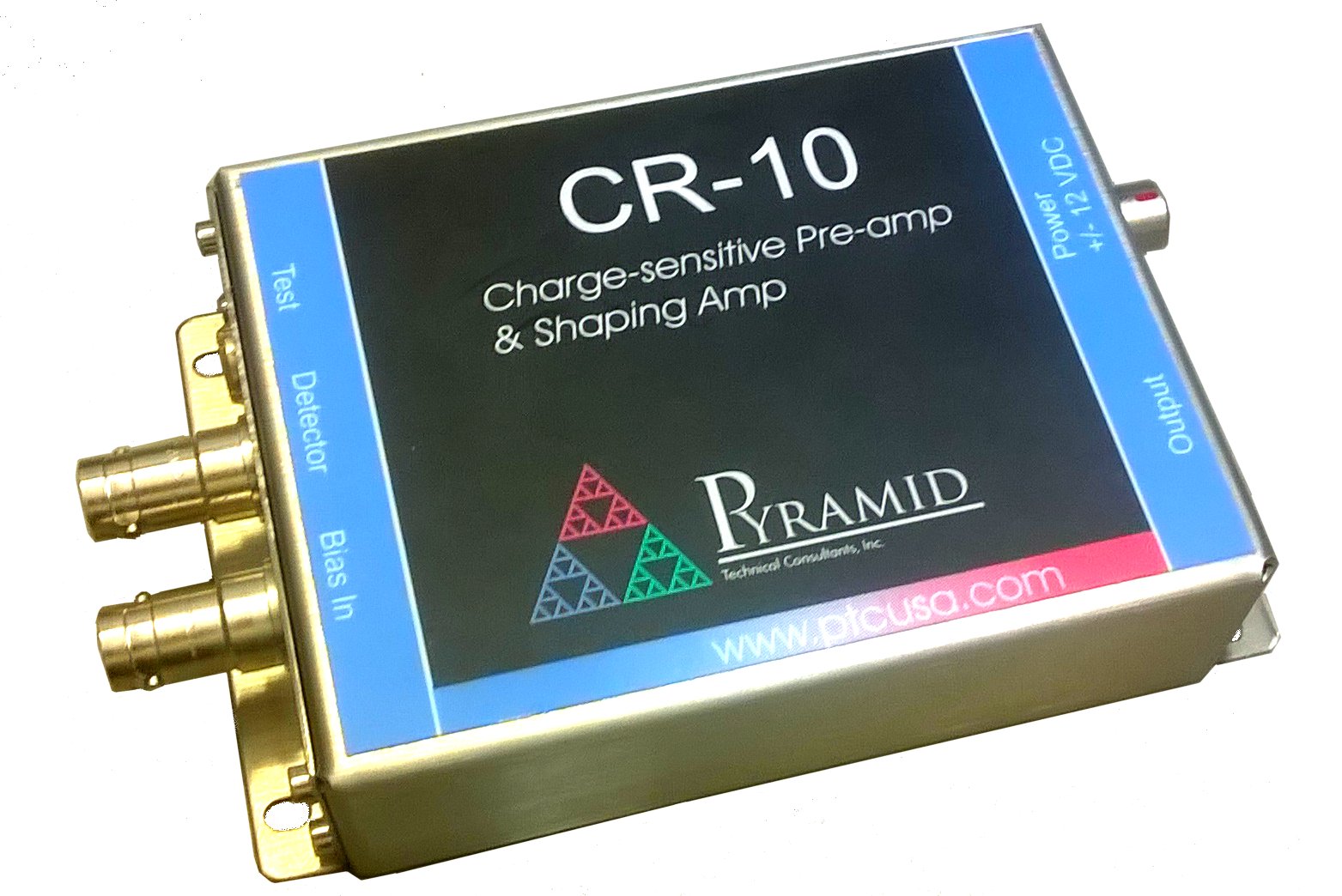
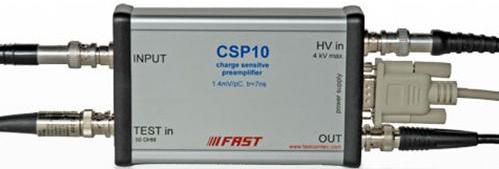
Instruments featuring Cremat modules
A number of other companies have developed detection instruments based on Cremat modules. These instruments are commercially available and are sold and supported by these other companies.
These instruments are certainly useful for radiation detection applications, but they are also useful for evaluating Cremat modules. If you wish further information on these instruments or to have a discussion with a sales engineer you should contact these organizations directly.